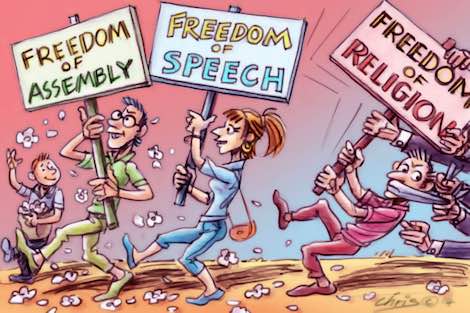
The Masked Truth
https://www.sbs.com.au/radio/audiotrack/freedom-religion-and-secularism-australia
Australia remains predominantly Christian with 52 per cent of the population identifying with the religion in the 2016 Census. Catholicism is now the largest Christian denomination, comprising 23 percent of the population.
“The debate over same sex marriage has raised difficult issues, because, traditionally, many religious groups, not only Christians, but Muslims, and Buddhists, and Jews, and people from other religious groups, have taken the view that marriage is only a relationship that should be between a man and a woman. It’s unacceptable that someone should be dismissed or threatened because of their choice to vote either yes or no. We should have a real strong commitment to people’s freedom of speech.”Australia remains predominantly Christian with 52 per cent of the population identifying with the religion in the 2016 Census. Catholicism is now the largest Christian denomination, comprising 23 percent of the population.“The debate over same sex marriage has raised difficult issues, because, traditionally, many religious groups, not only Christians, but Muslims, and Buddhists, and Jews, and people from other religious groups, have taken the view that marriage is only a relationship that should be between a man and a woman. It’s unacceptable that someone should be dismissed or threatened because of their choice to vote either yes or no. We should have a real strong commitment to people’s freedom of speech.”
“That may no longer be appropriate in a setting where we have people from a variety of faiths: Hinduism, Islam, Buddhism are all growing faiths here in Australia, as is people with no religion. They make up quite a large percentage of the Australian population now, which wasn’t the case at federation. As a result we’re starting to adjust and change our laws to try and accommodate that variety of voice and often what that means is you’re taking religion more and more out of the laws because it no longer represents the majority.”
According to Neil Foster, this shift can also pose threats to the freedom of religion. He’s referring to a Christian children’s party entertainer, who lost her job after publicly supporting a “no vote” in the same-sex marriage postal survey.
“The debate over same sex marriage has raised difficult issues, because, traditionally, many religious groups, not only Christians, but Muslims, and Buddhists, and Jews, and people from other religious groups, have taken the view that marriage is only a relationship that should be between a man and a woman. It’s unacceptable that someone should be dismissed or threatened because of their choice to vote either yes or no. We should have a real strong commitment to people’s freedom of speech.”Australia remains predominantly Christian with 52 per cent of the population identifying with the religion in the 2016 Census. Catholicism is now the largest Christian denomination, comprising 23 percent of the population.“The debate over same sex marriage has raised difficult issues, because, traditionally, many religious groups, not only Christians, but Muslims, and Buddhists, and Jews, and people from other religious groups, have taken the view that marriage is only a relationship that should be between a man and a woman. It’s unacceptable that someone should be dismissed or threatened because of their choice to vote either yes or no. We should have a real strong commitment to people’s freedom of speech.”
The relation between religion and politics continues to be an important theme in political debate, despite the general agreement on the right to freedom of conscience and belief, and the need for a defined separation between religion and government. One reason for the importance of this topic is that religions often make strong claims on people’s allegiance, and universal religions make these claims on all people, rather than just a particular community. For example, Islam has traditionally held that all people owe obedience to Allah’s will. Thus, it is probably inevitable that religious commitments will sometimes come into conflict or with the demands of politics. But religious beliefs and practices also potentially support politics in many ways. The extent and form of this support is as important to political philosophers as is the possibility for conflict. Moreover, there has been a growing interest in minority groups and the political rights and entitlements they are due. One result of this interest is substantial attention given to the particular concerns and needs of minority groups who are distinguished by their religion, as opposed to ethnicity, gender, or wealth.
 oxygen 2 the soul